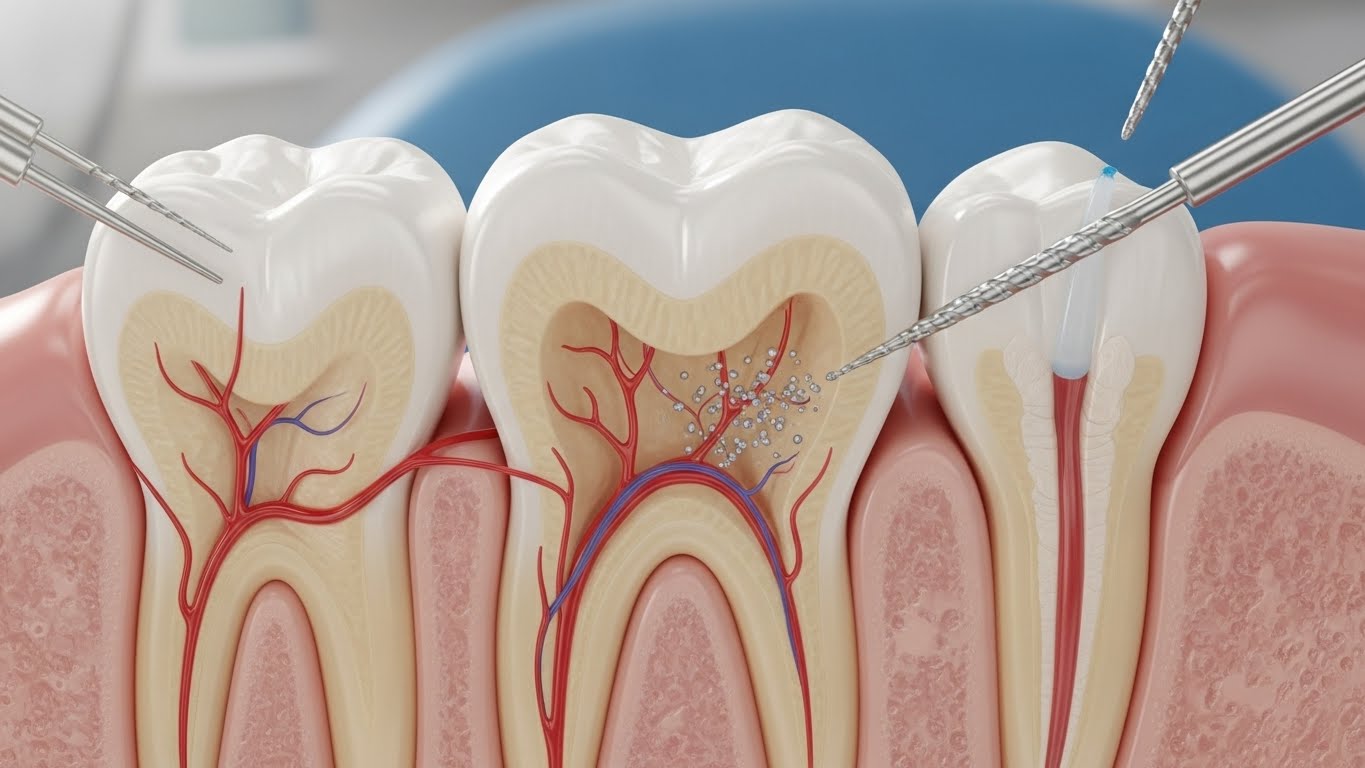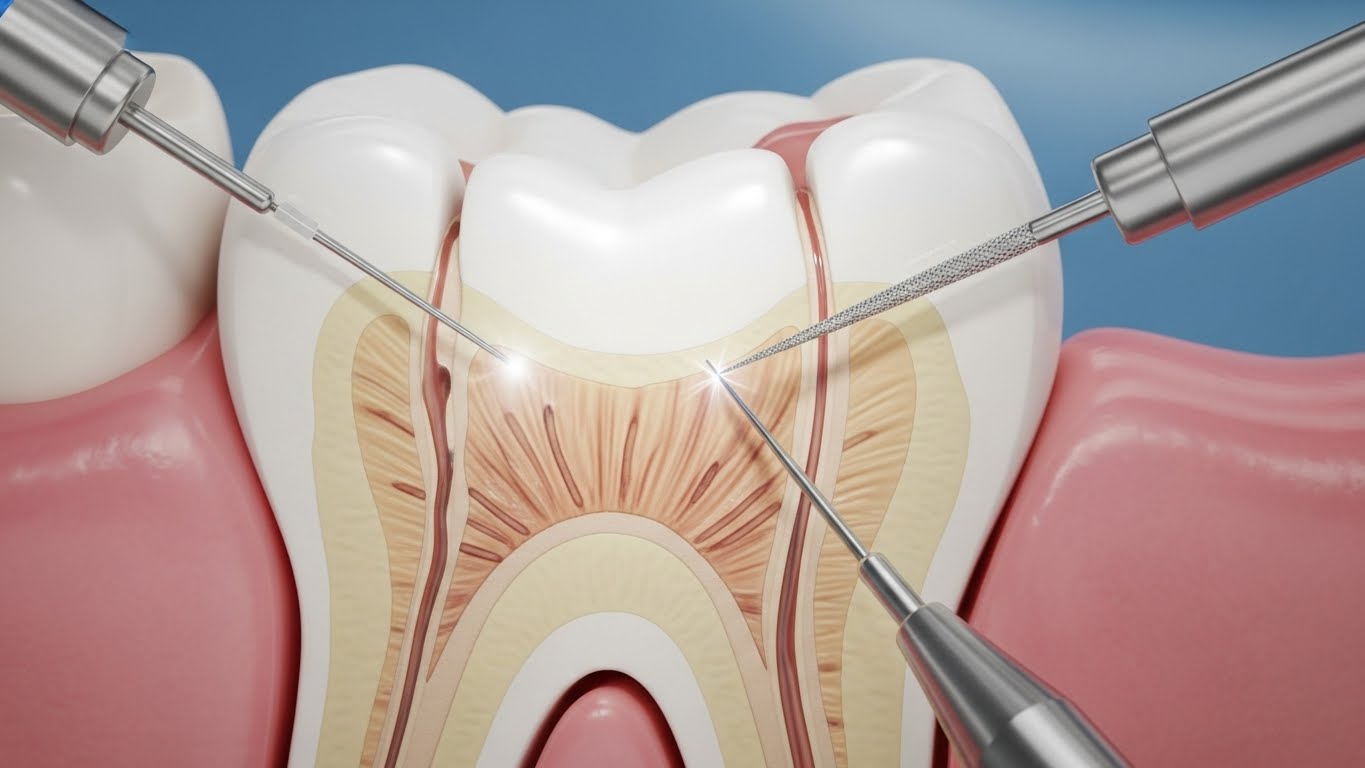
A tooth that has undergone root canal treatment can sometimes become noticeably darker than the surrounding teeth. The tooth may be healthy, stable, and functional, yet its gray, brown, or yellow appearance can make it stand out, particularly when the affected tooth is visible near the front of the smile. For patients dealing with this type of discoloration, internal bleaching after root canal treatment offers a specialized approach designed to lighten the tooth from within rather than relying exclusively on conventional surface whitening.
Internal bleaching is different from the whitening treatments commonly used to brighten several natural teeth at once. Traditional whitening products primarily act on external tooth surfaces. When discoloration originates from inside a non-vital or previously root canal-treated tooth, however, the source of the staining may be located deeper within the tooth structure.
This can occur after pulp tissue necrosis, trauma, or previous endodontic treatment. Blood products and other pigments from damaged tissue may penetrate the dentin, causing a tooth to gradually appear darker than neighboring teeth. Because these pigments are internal, ordinary whitening methods may not adequately address the color difference.
Before considering bleaching, the tooth should first be evaluated to determine why it has changed color. A dark tooth is not automatically only a cosmetic concern. Its appearance may be related to previous trauma, pulp damage, an existing root canal, or another condition that should be examined before whitening begins.
How Internal Bleaching Treats a Darkened Tooth
Internal bleaching is specifically designed for teeth in which discoloration has developed from within. Instead of applying whitening material only to the outside surface, the procedure allows the bleaching agent to work within the previously treated tooth.
The process begins with an examination of the tooth and its existing endodontic treatment. The provider needs to confirm that the root canal has been properly completed and that the tooth does not show signs of active infection or another condition that should be addressed first.
Dental imaging may be used to evaluate the root, surrounding bone, and previous treatment. This step is important because cosmetic improvement should not take priority over the health or structural condition of the tooth.
Once the tooth is considered appropriate for treatment, access is made to the internal portion of the crown. The root canal filling remains protected while whitening material is placed within the discolored portion of the tooth. The bleaching agent works on pigments embedded in the internal tooth structure.
Depending on the degree of discoloration and how the tooth responds, treatment may require more than one stage. The shade is monitored carefully so the treated tooth gradually approaches the appearance of neighboring teeth.
The objective is generally not to make one tooth dramatically brighter than the rest of the smile. A natural-looking result depends on achieving a balanced color relationship with nearby teeth.
Several factors can influence the final shade, including the original cause of discoloration, how long the tooth has been dark, the amount of remaining natural tooth structure, and the presence of existing restorations.
Internal bleaching is considered a conservative option because it addresses color while preserving the existing natural tooth structure. When a tooth is healthy and structurally appropriate for treatment, improving discoloration internally may avoid the need to cover the entire visible surface solely for cosmetic reasons.
Why Proper Diagnosis and Long-Term Care Matter
A root canal-treated tooth has already undergone significant dental treatment, so its long-term health remains an important consideration even when the current concern is cosmetic.
Root canal therapy is used when the dental pulp becomes inflamed, infected, or necrotic because of conditions such as deep decay, cracks, trauma, or other damage. During treatment, the internal canal system is cleaned and filled so the natural tooth can remain in place.
In some cases, the same biological changes that originally affected the pulp can contribute to discoloration. Pulp tissue necrosis, for example, may produce pigments that become incorporated into dentin and cause the tooth to darken.
Previous dental trauma can also affect tooth color. A tooth that experienced an injury years earlier may gradually become darker as internal tissues change. This is one reason a single discolored tooth should be professionally evaluated rather than treated with over-the-counter whitening products without understanding the cause.
Existing dental restorations also need to be considered. Fillings, bonding materials, and crowns do not respond to bleaching in the same way that natural tooth structure does. If a visible restoration is present, its shade may need to be evaluated after bleaching so the overall appearance remains balanced.
The condition of the tooth itself is equally important. Teeth that have received root canal treatment may require appropriate restorative protection depending on their location and the amount of remaining structure. Internal bleaching improves color, but it does not replace restorative treatment when structural reinforcement is needed.
Patients should continue routine dental examinations after whitening. These visits allow the dentist or endodontist to monitor the treated tooth, surrounding tissues, existing restorations, and overall oral health.
Professional internal bleaching after root canal treatment can be particularly valuable when a front tooth is healthy but noticeably darker than adjacent teeth. By targeting the discoloration from inside the tooth, treatment can improve the shade while maintaining a conservative approach to the natural dental structure.
A darkened tooth does not always need to remain visibly different from the rest of the smile. With appropriate examination, endodontic evaluation, and carefully controlled internal bleaching, many patients can improve the appearance of a previously treated tooth while continuing to preserve their natural smile.
FAQ
1: What is internal bleaching?
Internal bleaching is a specialized whitening procedure used to lighten discoloration that originates inside a non-vital or previously root canal-treated tooth.
2: Why can a tooth become dark after a root canal?
A tooth may darken because of internal pigments associated with damaged pulp tissue, previous trauma, pulp necrosis, or changes related to earlier endodontic treatment.
3: Is internal bleaching different from regular teeth whitening?
Yes. Regular whitening primarily treats stains from the outside of the teeth, while internal bleaching targets discoloration located within an individual tooth.
4: Can internal bleaching be used on one dark front tooth?
Yes. It is commonly considered when a single non-vital or root canal-treated tooth has become noticeably darker than neighboring teeth.
5: Does a dark tooth need to be examined before bleaching?
Yes. The provider should determine why the tooth has changed color and evaluate its root canal treatment, structure, and surrounding tissues before beginning cosmetic treatment.
6: What is pulp tissue necrosis?
Pulp tissue necrosis occurs when the living tissue inside a tooth dies. Trauma, infection, or other damage can cause this change and may also contribute to internal discoloration.
7: Will internal bleaching whiten a dental crown?
No. Crowns and other restorative materials do not respond to bleaching like natural tooth structure, so their color may require separate evaluation.
8: How many internal bleaching sessions are needed?
The number varies depending on the severity and cause of the discoloration and how the individual tooth responds to the bleaching process.
9: Is internal bleaching a conservative treatment?
Yes. Internal bleaching is designed to improve discoloration while preserving the natural tooth structure rather than automatically covering the tooth with a cosmetic restoration.
10: What is the goal of internal bleaching?
The goal is to reduce internal discoloration and help the treated tooth achieve a more natural, uniform color relationship with the surrounding teeth. Book your appointment today.