Understanding the Dental Pulp and Why It Matters
The living center of the tooth
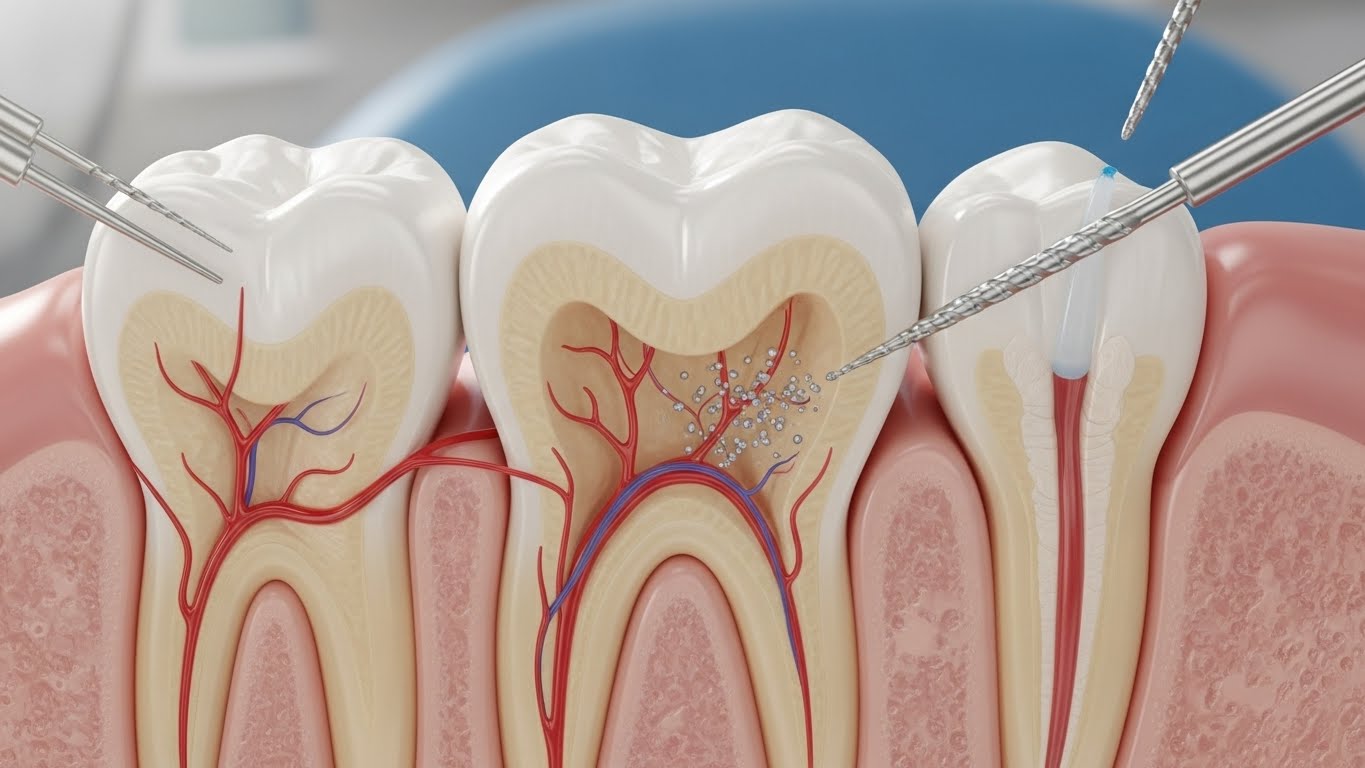
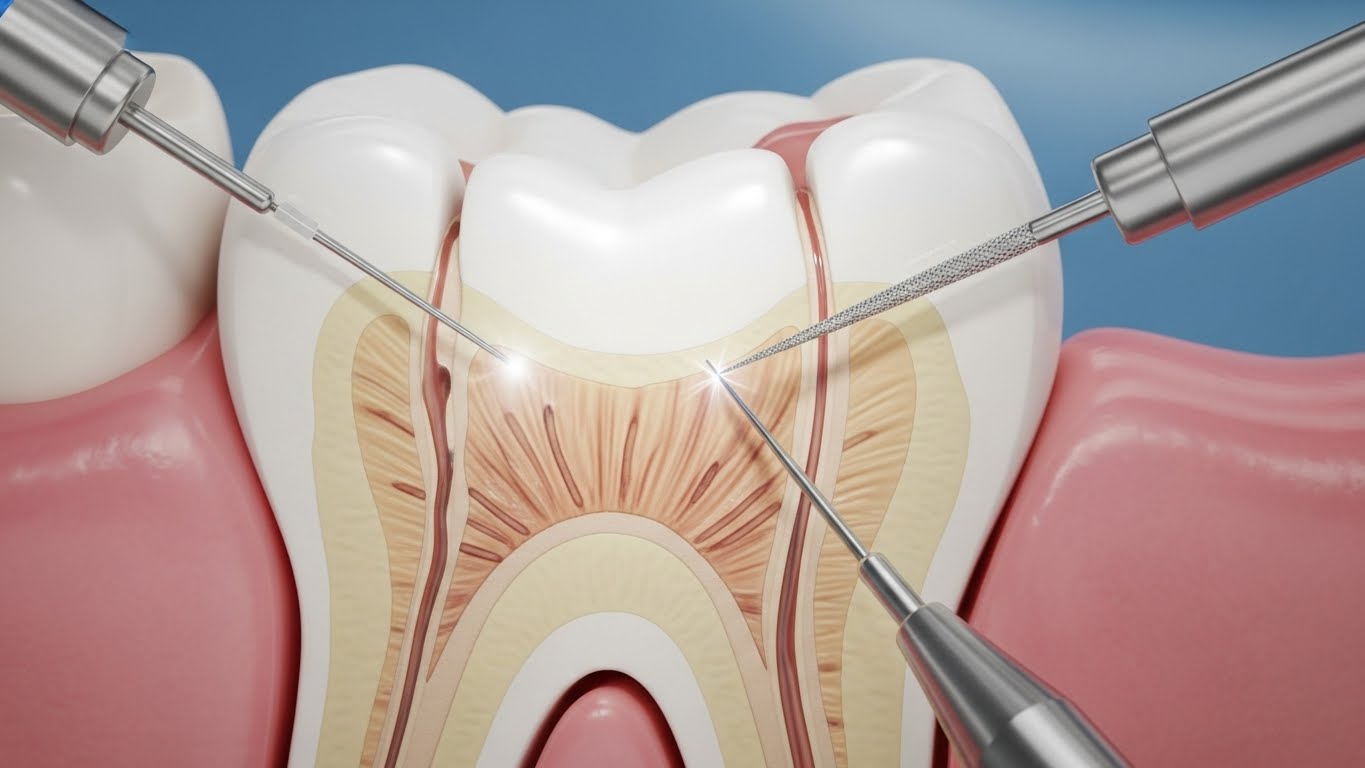
Dental pulp is the soft tissue found at the center of every tooth. It contains nerves, blood vessels, and connective tissue that work together to support tooth development and sensory function. Pulp tissue plays a critical role during tooth formation and continues to contribute to the overall health of the tooth throughout life. Because it is enclosed by hard enamel and dentin, the pulp is sensitive to changes in its environment, including trauma, decay, or structural damage.
In Endodontic Care, the condition of the dental pulp is closely evaluated because it directly influences tooth vitality and long term stability. When pulp tissue is compromised, it can affect the surrounding structures and the way the tooth functions over time. This is why the pulp is a central focus in both traditional and emerging endodontic approaches.
What Is Dental Pulp Regeneration?
A developing focus within regenerative endodontics
Dental Pulp Regeneration refers to an area of regenerative endodontics that explores ways to support the restoration of pulp tissue like function inside the tooth. Rather than focusing solely on removal of damaged pulp tissue, this concept centers on biological processes that may allow new tissue to form within the pulp space.
This field is often discussed in contrast to conventional root canal treatments, which are designed to remove infected or irreversibly damaged pulp tissue and preserve the remaining tooth structure. Dental Pulp Regeneration, by comparison, reflects a broader scientific interest in restoring biological activity within the tooth under specific conditions. It is considered an evolving area of Endodontic Care and continues to be studied in both clinical and research settings.
Where Dental Pulp Regeneration Fits in Modern Endodontic Care
Expanding the scope of tooth preservation
Endodontic Care has advanced significantly over the years, driven by improvements in imaging, materials, and biological understanding. High resolution imaging allows endodontists to better visualize root canal anatomy, while modern techniques support more precise and conservative approaches to care.
Within this context, Dental Pulp Regeneration represents a shift toward biologically focused dentistry. It aligns with a broader goal of preserving natural structures whenever possible and supporting the tooth’s long term integrity. While traditional root canal treatments remain an essential part of endodontics, regenerative concepts reflect how the field continues to expand beyond mechanical solutions alone.
Why Incomplete Root Development Is a Key Topic
A unique consideration in younger teeth
Incomplete root development is frequently referenced in discussions about Dental Pulp Regeneration. This condition occurs when a tooth has not finished forming its root structure, which can result in open root tips and thinner dentin walls. These characteristics can influence how the tooth responds to damage and how it develops over time.
Because pulp tissue plays a major role in root formation, preserving or restoring its function is of particular interest when root development is not complete. For this reason, regenerative endodontics research often highlights cases involving incomplete root development as an area where biological approaches may offer long term structural benefits.
Dental Pulp Regeneration vs Traditional Root Canal Treatments
Differences in purpose and long term focus
Traditional root canal treatments and Dental Pulp Regeneration are based on different objectives within Endodontic Care. Root canal treatments focus on eliminating diseased pulp tissue and sealing the root canal system to protect the tooth from further damage. This approach has a long history of success in preserving teeth that might otherwise be lost.
Dental Pulp Regeneration, on the other hand, is centered on the possibility of restoring pulp tissue like activity rather than removing it entirely. The emphasis is on biological repair and continued development rather than replacement with inert materials. Both concepts exist within modern endodontics, each addressing different clinical goals and considerations.
The Science Behind Pulp Tissue Regeneration
Biological principles guiding research
Cellular activity and regenerative potential
Research into Dental Pulp Regeneration often focuses on the role of cells that can contribute to new tissue formation. These cells are studied for their ability to differentiate and support the creation of structures similar to natural pulp tissue. Understanding cellular behavior is a foundational aspect of regenerative endodontics.
Signaling pathways and healing responses
Another key area of study involves signaling molecules that influence how cells communicate and respond to injury. These signals help guide tissue development and repair processes. In the context of pulp tissue, they are examined for their role in promoting organized tissue growth within the tooth.
Structural frameworks within the pulp space
Scaffold concepts are also discussed in regenerative endodontics. These frameworks are designed to support tissue organization as new cells populate the pulp space. While still under study, scaffold based approaches highlight the complexity of recreating functional pulp tissue within a confined environment.
Potential Benefits Being Studied
Goals under investigation in regenerative endodontics
Dental Pulp Regeneration is associated with several potential benefits that continue to be explored through research. These include supporting the biological vitality of the tooth, encouraging continued root development in certain cases, and improving long term structural resilience. It is important to note that these outcomes are areas of ongoing investigation rather than guaranteed results.
By focusing on pulp tissue preservation and regeneration, researchers aim to better understand how natural tooth structures can be supported over time. This research driven approach reflects the cautious and evidence based nature of modern Endodontic Care.
Limitations and Ongoing Research
Why the field continues to evolve
Variation between individual cases
One of the challenges in Dental Pulp Regeneration is variability. Teeth differ in anatomy, development stage, and biological response, which can affect outcomes. This variability is a key reason why research continues to refine regenerative approaches.
Long term evidence and predictability
Long term data is essential in evaluating any advancement in Endodontic Care. Because Dental Pulp Regeneration is still developing, researchers continue to study long term outcomes to better understand predictability and durability.
The role of specialized Endodontic Care
Regenerative endodontics requires advanced knowledge of dental biology and materials science. As research progresses, specialized expertise remains central to evaluating and applying these concepts responsibly within the field.
The Takeaway: A New Chapter in Endodontic Care
Progress guided by biological understanding
Dental Pulp Regeneration represents an emerging chapter in modern Endodontic Care. Closely associated with topics such as incomplete root development and pulp tissue preservation, it reflects a broader shift toward biologically informed dentistry. While traditional root canal treatments remain foundational, regenerative approaches highlight how endodontics continues to evolve through science, research, and innovation.
FAQ
- What is Dental Pulp Regeneration in Endodontic Care?
Dental Pulp Regeneration is an area of regenerative endodontics that explores ways to restore pulp tissue like function within a tooth using biological principles. - How does Dental Pulp Regeneration differ from root canal treatments?
Root canal treatments focus on removing damaged pulp tissue, while Dental Pulp Regeneration focuses on restoring or supporting biological activity within the pulp space. - Why is incomplete root development important in regenerative endodontics?
Incomplete root development is important because pulp tissue plays a role in root formation, making it a key focus in discussions about regeneration. - What role does pulp tissue play in tooth health?
Pulp tissue provides nourishment, sensory function, and support for tooth development, contributing to overall tooth vitality. - Is Dental Pulp Regeneration the same as regenerative endodontics?
Dental Pulp Regeneration is a component of regenerative endodontics, which is a broader field focused on biologically based dental repair. - Who provides care related to Dental Pulp Regeneration?
Endodontic Care related to regenerative concepts is typically associated with dental specialists trained in advanced endodontics. - How does modern Endodontic Care support regenerative approaches?
Modern Endodontic Care integrates advanced imaging, materials, and biological research to explore regenerative possibilities. - Are regenerative approaches commonly discussed alongside root canal treatments?
Yes, Dental Pulp Regeneration is often discussed alongside root canal treatments as part of the evolving scope of endodontics. - What scientific areas support pulp tissue regeneration research?
Research involves cellular biology, signaling mechanisms, and structural frameworks within the pulp space. - Why is Dental Pulp Regeneration still being studied?
It is still being studied due to variability between cases and the need for long term evidence to better understand outcomes.