Root canal treatment preserves an infected or inflamed tooth by removing diseased tissue from inside it, while tooth extraction removes the entire tooth from its socket. When a damaged tooth can be predictably restored, saving it often maintains the most natural chewing function and avoids an immediate gap. Extraction may be appropriate when the tooth is fractured beyond repair, lacks adequate bone support, cannot be restored, or has an otherwise unfavorable prognosis.
The right choice depends on more than pain. Dentists and endodontists evaluate the remaining tooth structure, root condition, periodontal support, infection, cracks, previous treatment, bite forces, medical history, and replacement options. A careful diagnosis is essential because neither treatment is automatically best for every patient or every tooth.
What Happens During Root Canal Treatment?
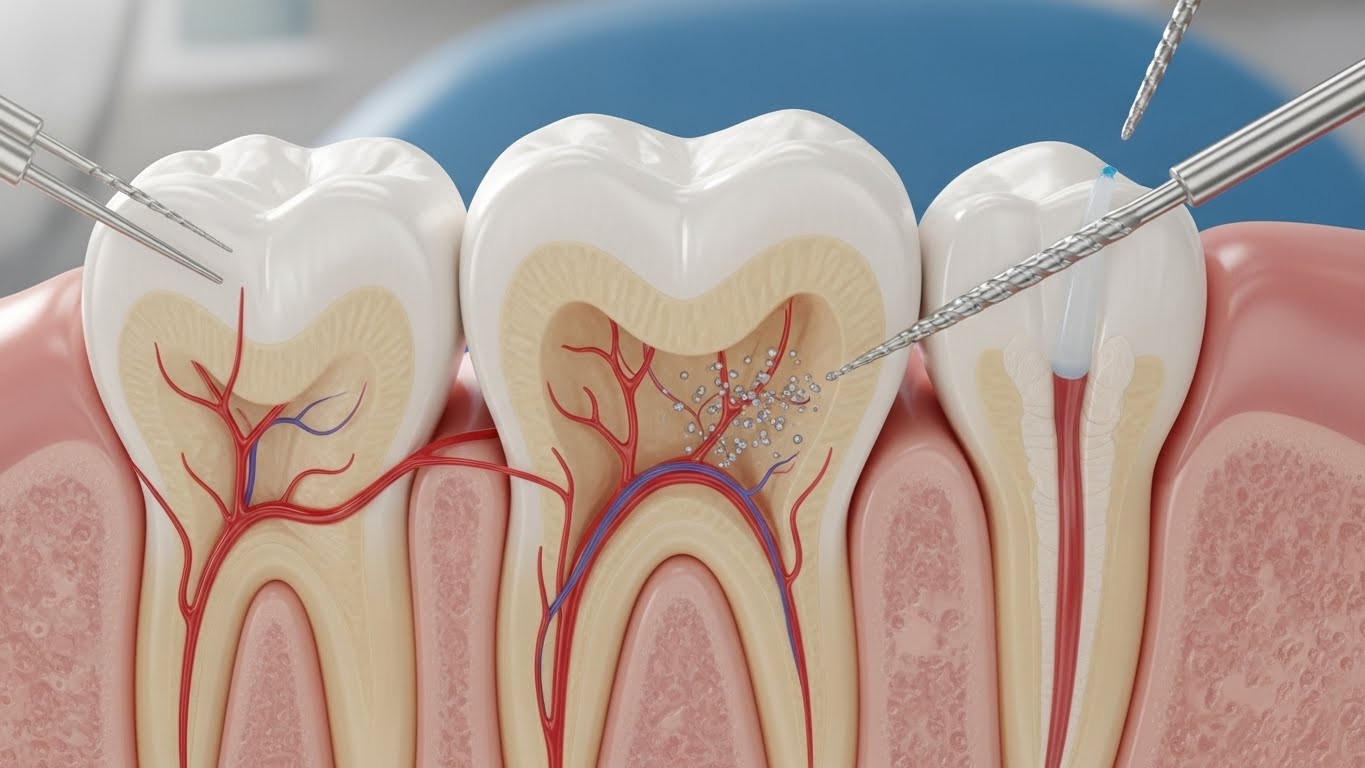
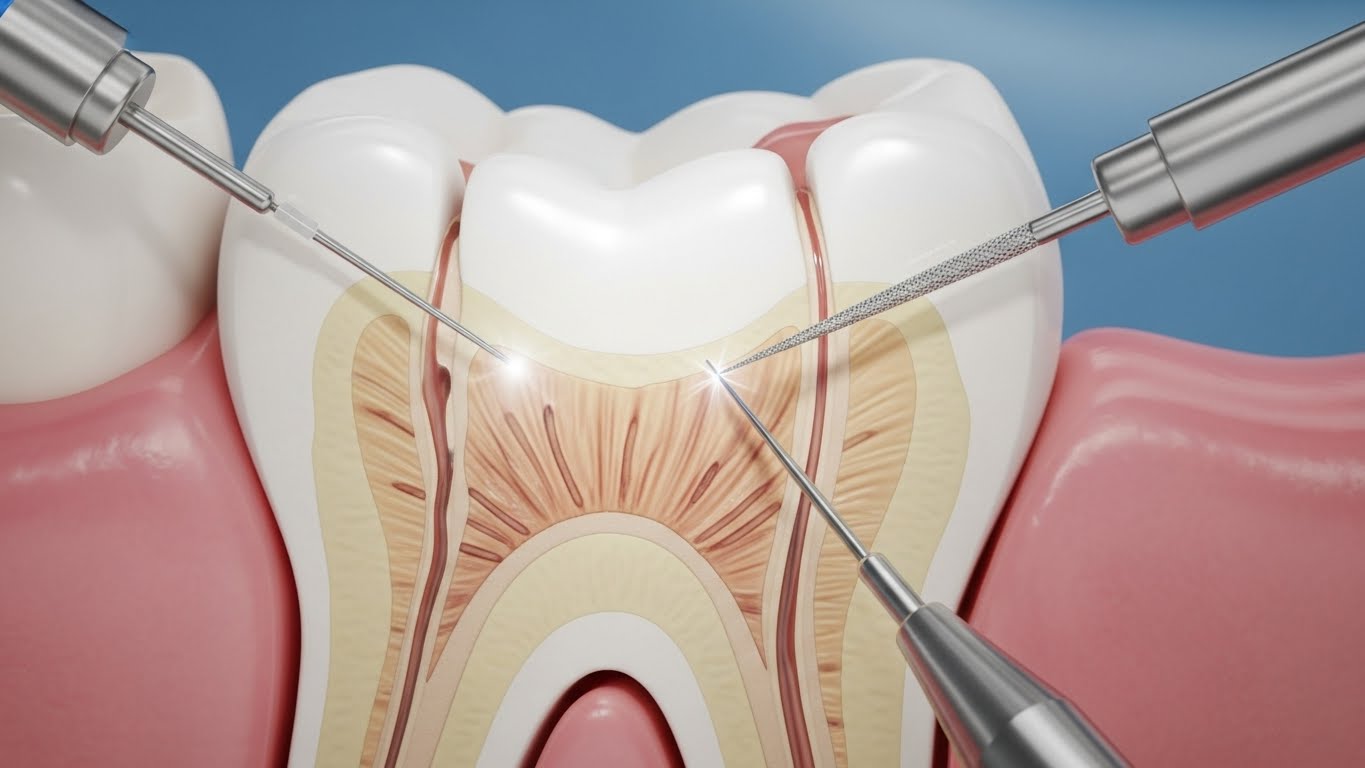
Root canal treatment addresses disease inside a tooth. After the area is numbed, the clinician creates a small opening in the tooth and removes inflamed or infected pulp tissue. The canals are cleaned, shaped, disinfected, filled with a biocompatible material, and sealed to reduce the risk of bacterial re-entry.
The tooth must then be restored appropriately. Some teeth need a permanent filling, while many back teeth require a crown because decay, cracks, or previous restorations have weakened the remaining structure. Root canal treatment manages the internal problem; the final restoration protects the tooth and allows it to function.
What Happens During a Tooth Extraction?
Extraction removes the tooth from the jaw. A simple extraction may be used when the tooth is visible and accessible above the gumline. A surgical extraction may be necessary when the tooth is broken near the gums, impacted, or difficult to remove through a simple approach.
After extraction, a blood clot forms in the socket and supports early healing. Patients receive instructions about bleeding control, diet, oral hygiene, and activities. Unless the tooth is a wisdom tooth or is removed for planned orthodontic reasons, the resulting space may eventually need to be replaced.
When Is Saving a Tooth With Root Canal Treatment Possible?
A tooth may be a good candidate when the source of pain or infection is inside the pulp but the roots, surrounding bone, and remaining crown structure provide a reasonable foundation. Deep decay, certain cracks, traumatic pulp damage, and infection around the root can often be managed endodontically when the tooth is restorable.
The ability to place a durable final restoration is critical. A technically successful root canal cannot compensate for a tooth that lacks enough sound structure to support a filling or crown. The clinician may assess the decay level, crack pattern, crown-to-root relationship, periodontal condition, and how the tooth fits into the overall bite.
When Might Extraction Be the Better Choice?
Extraction may be recommended when a tooth cannot be predictably saved or restored. Examples include a vertical root fracture, severe decay extending too far below the gumline, extensive loss of supporting bone, uncontrolled root resorption, or structural damage that prevents a reliable seal and restoration.
Removal may also be considered when previous root canal treatment has failed and retreatment or endodontic surgery cannot reasonably correct the cause. Patient health, treatment goals, finances, timing, and willingness to complete necessary follow-up care also influence the plan. An unfavorable tooth should not be maintained solely to avoid extraction.
Root Canal Treatment Versus Extraction: Key Differences
The most obvious difference is that root canal treatment retains the natural tooth while extraction removes it. Preserving a tooth generally maintains natural contact with neighboring and opposing teeth, supports chewing, and avoids immediate decisions about closing a new space. Keeping a natural tooth also helps preserve established bite relationships.
Extraction may appear faster because the diseased tooth is removed, but the complete treatment timeline can extend when replacement is planned. An implant requires evaluation, healing, and restorative steps. A fixed bridge involves neighboring teeth, while a removable partial denture requires design, fitting, and adaptation.
Recovery also differs. Root canal patients may experience temporary tenderness, but the tooth remains in place. Extraction creates a healing socket and may involve swelling, bleeding, or dietary limitations. The experience varies with the tooth, infection, procedure complexity, and individual health.
What Are the Consequences of Leaving a Gap?
Some extracted teeth do not require replacement. Wisdom teeth are not typically replaced, and orthodontic extractions create spaces that treatment is designed to close. For many other permanent teeth, an untreated gap can affect function and alignment.
Neighboring teeth may tilt or drift, and the opposing tooth may move toward the open space. Chewing patterns can change, and bone in the extraction area may gradually remodel. The significance depends on the tooth’s location, the patient’s bite, remaining teeth, and long-term plan.
What Replacement Options Follow Extraction?
A dental implant replaces the root portion with a fixture in the jawbone and supports a crown. It does not require the neighboring teeth to hold the restoration, but it involves surgery and requires adequate bone, healthy tissues, healing time, and appropriate medical considerations.
A fixed bridge suspends a replacement tooth between supporting restorations. It can be useful when neighboring teeth already require crowns, although otherwise healthy teeth may need preparation. A removable partial denture can replace one or several teeth and is taken out for cleaning. Each option has different advantages, limitations, costs, and maintenance needs.
How Does an Endodontist Help With the Decision?
An endodontist specializes in diagnosing tooth pain and treating conditions involving the pulp and roots. Consultation can be especially useful when a tooth has complex anatomy, a suspected crack, previous root canal treatment, persistent infection, trauma, or an uncertain prognosis.
Diagnostic steps may include a symptom history, pulp testing, bite tests, periodontal measurements, magnification, conventional X-rays, and three-dimensional imaging when appropriate. The goal is not to save every tooth at any cost; it is to determine whether endodontic treatment can provide a predictable, functional result.
Patients comparing root canal treatment versus tooth extraction should ask whether the tooth is restorable, what its expected prognosis is, which risks could affect success, and what treatment would be required after either choice.
What If a Previous Root Canal Has Failed?
New symptoms after previous treatment do not automatically mean the tooth must be removed. Reinfection may occur because of untreated anatomy, leakage, new decay, a damaged restoration, or a fracture. Nonsurgical retreatment may allow the canals to be reopened, cleaned, and sealed again.
When retreatment is not appropriate or disease persists near the root tip, root-end surgery may be considered. Extraction becomes more reasonable when the cause cannot be corrected, the tooth cannot be restored, the root is vertically fractured, or periodontal support is inadequate.
Making an Informed Choice in Mission Viejo, CA
Patients in Mission Viejo and nearby Orange County communities should receive a clear explanation of their diagnosis and all reasonable options. Useful questions include: Can this tooth be restored after treatment? Is there evidence of a root fracture? Would retreatment or surgery help? What are the expected treatment steps, costs, recovery periods, and maintenance requirements?
Seeking care promptly can preserve choices. Decay can remove additional structure, cracks can progress, and infection can damage supporting tissues. Severe swelling, fever, difficulty swallowing, or breathing difficulty requires urgent professional attention.
The Best Treatment Is the One That Fits the Tooth
Root canal treatment is often the preferred option when a natural tooth can be predictably disinfected, sealed, restored, and maintained. Extraction is appropriate when the tooth has an unfavorable structural or periodontal outlook or when tooth-preserving treatment cannot address the disease.
A personalized evaluation provides more value than a general rule. By comparing prognosis, function, total treatment needs, patient preferences, and long-term maintenance, the dental team and patient can choose the option most likely to support lasting oral health.
Frequently Asked Questions
Is a root canal always better than an extraction?
No. Saving a restorable natural tooth is often preferred, but extraction may be appropriate when severe fractures, decay, bone loss, or other problems create an unfavorable prognosis. Diagnosis and restorability determine the better option.
Which procedure is more painful?
Both procedures are performed with local anesthesia. Post-treatment discomfort varies with infection, procedure complexity, and individual healing. Root canal treatment is intended to relieve pulpal pain, while extraction creates a socket that must heal.
Is extraction cheaper than root canal treatment?
Extraction alone may cost less initially. If the missing tooth is replaced with an implant, bridge, or partial denture, total costs can be higher. Compare the complete treatment plans rather than only the first procedure.
What happens if I extract a tooth and do not replace it?
The effects depend on the tooth and bite. Nearby teeth may drift, the opposing tooth may move, chewing can change, and bone may remodel. Wisdom teeth and planned orthodontic extractions generally do not need replacement.
Can a failed root canal be treated again?
Often, yes. Nonsurgical retreatment or root-end surgery may address persistent disease when the cause can be identified and corrected. A vertical root fracture, nonrestorable damage, or inadequate support may make extraction more appropriate.
How quickly should I decide?
Do not delay an evaluation when pain, swelling, or infection is present. Prompt diagnosis can preserve more options. Facial swelling, fever, difficulty swallowing, or breathing difficulty warrants urgent professional attention.