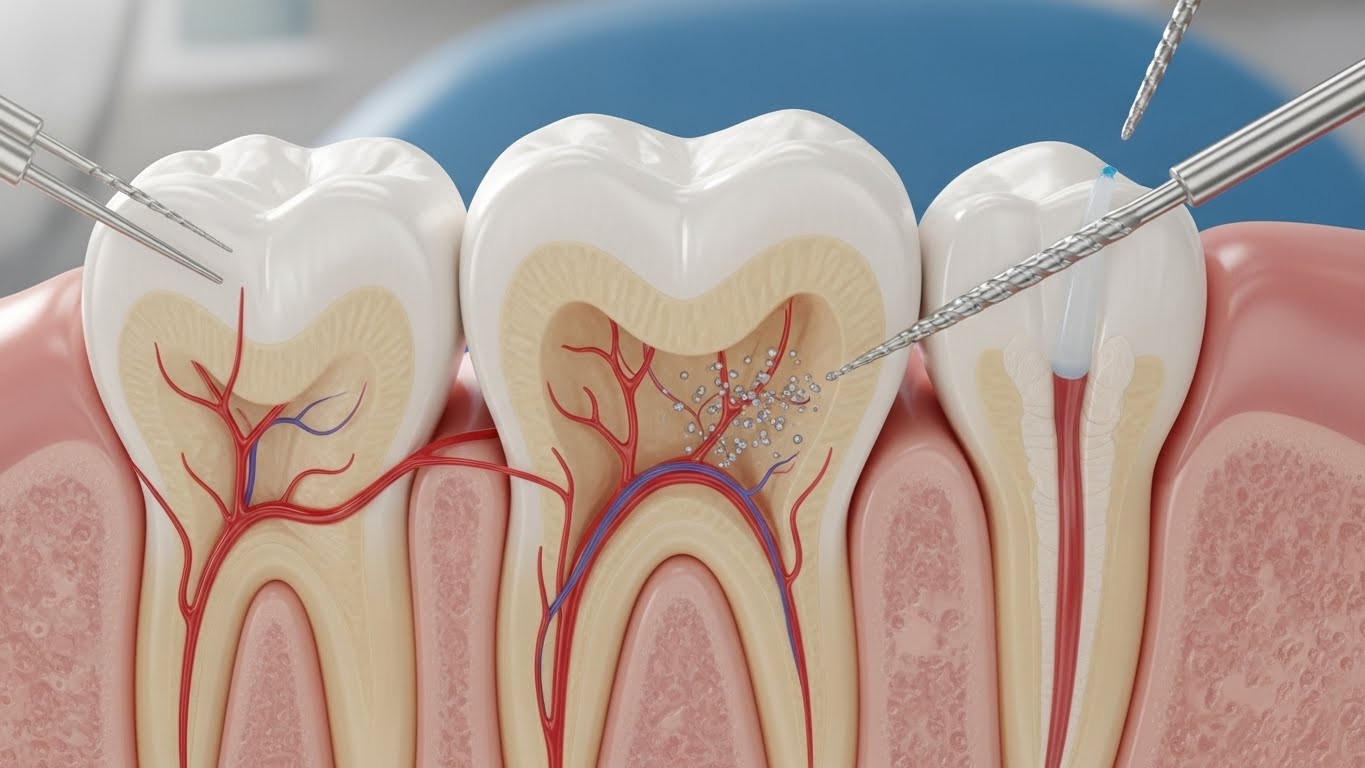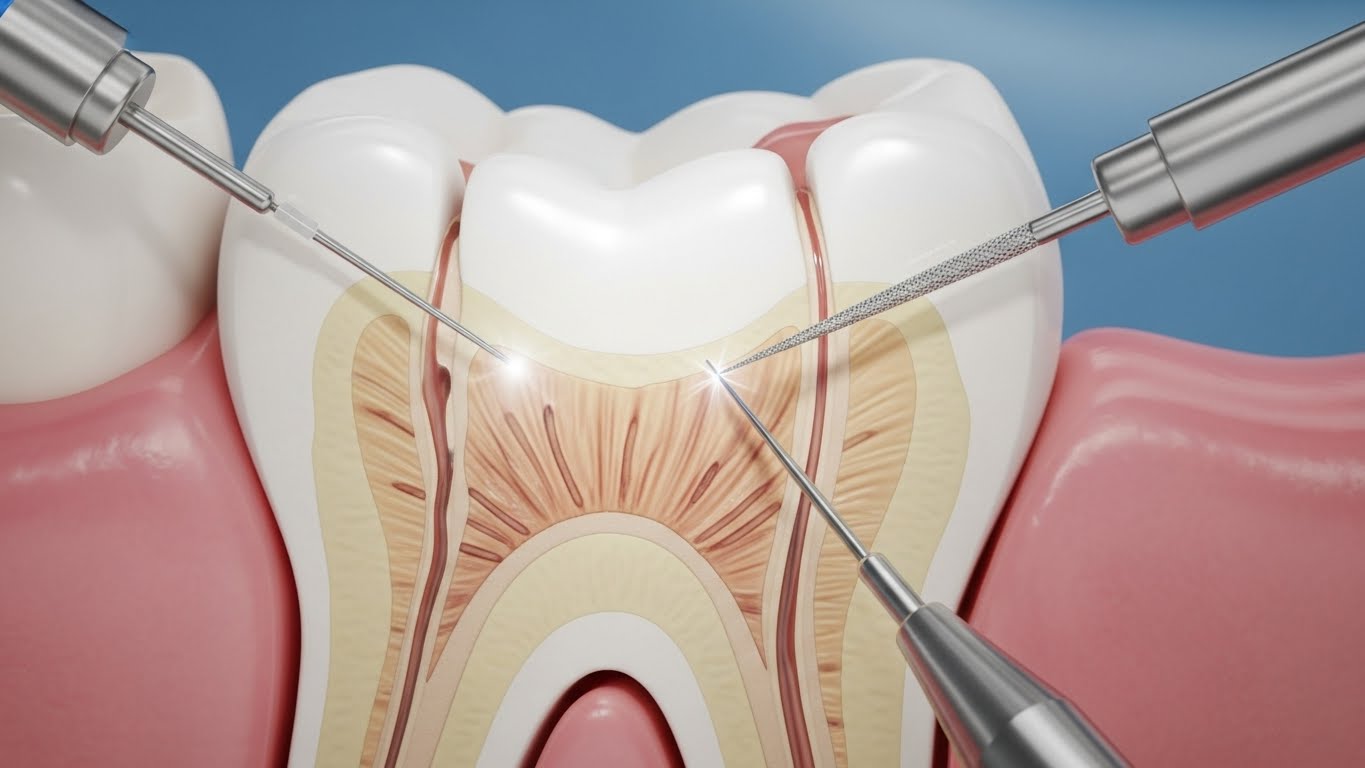
Common “Signs You May Need Root Canal Treatment” include lingering sensitivity to heat or cold, pain when chewing, spontaneous throbbing, bump on the gum, tooth discoloration, and a chipped or cracked tooth. These symptoms can develop when the dental pulp inside a tooth becomes inflamed, infected, or damaged.
However, symptoms alone cannot confirm the need for treatment. Tooth pain may also come from gum disease, grinding, a loose filling, sinus pressure, or another nearby tooth. Some infected teeth cause little or no pain. A dentist or endodontist must examine the tooth, perform clinical tests, and review dental images before making a diagnosis.
What Is Root Canal Treatment?
Root canal treatment is a procedure used to save a natural tooth when its pulp cannot recover from inflammation or infection. The pulp is the soft tissue at the center of the tooth containing nerves, blood vessels, and connective tissue. Deep decay, cracks, trauma, repeated dental work, or leakage around a restoration can allow bacteria or irritation to reach this area.
During treatment, the inflamed or infected tissue is removed. The inside of the tooth is cleaned, shaped, disinfected, filled, and sealed. The tooth then needs an appropriate permanent restoration, which may include a crown, to protect its remaining structure and restore function.
1. Lingering Sensitivity to Hot or Cold
Brief sensitivity when consuming something hot or cold does not always indicate serious pulp damage. Exposed root surfaces, early decay, enamel wear, recent dental treatment, or a loose filling can cause short-lived discomfort.
Sensitivity becomes more concerning when pain continues after the temperature source has been removed. Lingering discomfort, especially when intense or worsening, may mean the pulp cannot heal on its own. A clinician can compare the tooth’s response with neighboring teeth and determine whether the pulp is temporarily irritated or irreversibly inflamed.
2. Severe Pain When Biting or Chewing
Sharp pain when biting may come from decay, a cracked tooth, a loose restoration, inflammation around the root, or a bite imbalance. Pain that occurs when pressure is released can be associated with certain cracks. Because cracks can be difficult to see, magnification, bite tests, illumination, and imaging may be used during evaluation.
Root canal treatment may help when a crack or deep cavity has damaged the pulp but the tooth remains restorable. If a fracture extends too deeply through the root, the tooth may not be savable. Early diagnosis can preserve more treatment options.
3. Spontaneous or Throbbing Tooth Pain
Pain that begins without eating, drinking, or touching the tooth deserves prompt assessment. It may feel dull, sharp, pulsing, or difficult to locate. Some patients notice that it interrupts sleep or becomes more noticeable when lying down.
4. Swollen or Tender Gums
Inflammation or infection from a tooth can affect the gum and bone near its root. The area may feel tender, appear swollen, or hurt when touched. Swelling may remain localized, but infection can also spread into the face or surrounding tissues.
Visible facial swelling, fever, difficulty swallowing, confusion, or rapidly worsening symptoms require urgent care. Antibiotics may be appropriate when infection is spreading or systemic symptoms are present, but medication alone does not clean an infected root canal or repair the source of the problem.
5. A Darkened or Discolored Tooth
A tooth can darken after trauma because of changes within the pulp or breakdown products inside the tooth. Internal discoloration can also occur after the pulp becomes necrotic. Not every color change means root canal treatment is necessary, as stains, restorative materials, and natural variation can alter appearance.
An examination helps determine whether the pulp is healthy. The clinician may test the tooth’s response, check for tenderness, and review its history and radiographic appearance. If the pulp is nonvital or infected, endodontic treatment may be recommended before cosmetic concerns are addressed.
6. A Chipped, Cracked, or Injured Tooth
Trauma can injure the pulp even when the outer damage appears minor. A sports accident, fall, collision, or hard bite may crack enamel and dentin or disrupt the tooth’s blood supply. Symptoms may start immediately or emerge months later.
Not every injured tooth needs a root canal. Some require monitoring, bonding, a crown, repositioning, or vital pulp therapy. When damage reaches the pulp or causes irreversible inflammation or necrosis, root canal treatment may help preserve the tooth. Prompt assessment is particularly important after a tooth is displaced or knocked out.
Can You Need a Root Canal Without Tooth Pain?
Yes. A tooth may require root canal treatment even when it does not hurt. The pulp can die quietly after decay or trauma, and chronic infection may drain through the gum rather than build painful pressure. A dark tooth, gum bump, radiographic change, or history of injury may provide the first clue.
This is one reason routine examinations matter. Dentists can detect changes that patients cannot see or feel. Still, treatment should not be based on an X-ray alone; clinical findings, pulp tests, symptoms, and the tooth’s restorability must be considered together.
How Is the Need for Root Canal Treatment Diagnosed?
Diagnosis begins with a detailed history. The clinician asks where the discomfort occurs, what triggers it, how long it lasts, whether it wakes the patient, and how symptoms have changed. The tooth and nearby tissues are examined for decay, cracks, swelling, restorations, and bite problems.
Tests may include responses to cold or heat, gentle tapping, pressure, palpation, mobility, and bite testing. Dental X-rays show roots, bone, deep decay, and changes near the root tips. Three-dimensional imaging may be recommended in selected complex cases. No single test answers every question, so the results are interpreted together.
Patients researching signs you may need root canal treatment can benefit from an endodontic evaluation when symptoms persist, the diagnosis is uncertain, or a tooth has complex anatomy, previous treatment, trauma, or a suspected crack.
What Happens If Treatment Is Delayed?
Untreated pulp inflammation may progress to necrosis and infection. Infection can damage bone around the root, create an abscess, or spread into nearby tissues. Delaying care may also reduce the amount of healthy tooth structure available for restoration and increase the likelihood that extraction becomes necessary.
Temporary pain relief does not remove the cause. Over-the-counter medication may reduce symptoms, but it cannot disinfect the inside of a tooth. Avoid placing aspirin on the gum or tooth because it can injure soft tissue. Persistent or recurring symptoms should be professionally evaluated.
What Can Mission Viejo Patients Expect?
Patients in Mission Viejo and nearby Orange County communities should expect a diagnosis before treatment is recommended. An endodontist focuses on conditions involving dental pulp, root canals, cracks, trauma, and difficult-to-locate tooth pain. Modern anesthesia and specialized techniques are used to support comfort and precision.
After root canal treatment, some tenderness may occur for a few days. Patients should follow the provided instructions, avoid heavy chewing on an unrestored tooth, and complete the final filling or crown promptly. With appropriate treatment, restoration, oral hygiene, and ongoing dental care, many treated teeth can remain functional for years.
Listen to Symptoms, but Rely on a Professional Diagnosis
Lingering temperature sensitivity, biting pain, swelling, gum bumps, discoloration, spontaneous aching, deep decay, and dental injuries are all reasons to seek an evaluation. They do not automatically mean a root canal is necessary, but they should not be ignored.
Early assessment can relieve uncertainty, identify the source of pain, and preserve the widest range of treatment choices. When the pulp is irreversibly damaged or infected and the tooth can be restored, root canal treatment can remove the diseased tissue, protect surrounding structures, and help maintain the natural smile.
Frequently Asked Questions
What is the most common sign that a root canal may be needed?
Lingering sensitivity to heat or cold and significant pain when biting are common warning signs. However, no single symptom confirms the diagnosis, and some infected teeth produce little or no pain.
Can tooth pain disappear even if I still need treatment?
Yes. Pain may decrease when severely damaged pulp loses vitality, but bacteria and infection can remain inside the tooth. Unexplained symptom changes should be evaluated rather than assumed to represent healing.
Does every cracked tooth require a root canal?
No. Treatment depends on the crack’s depth, location, symptoms, and effect on the pulp. Some cracks need only protection with a crown, while deeper cracks involving the pulp may require root canal treatment. Certain root fractures make the tooth nonrestorable.
Can an infected tooth heal with antibiotics alone?
Antibiotics may help when infection is spreading or systemic symptoms are present, but they generally do not eliminate bacteria sealed inside a necrotic root canal. Definitive dental treatment is needed to address the source.
Is root canal treatment painful?
Local anesthesia is used to numb the tooth and surrounding tissues. Modern treatment is intended to relieve pain caused by inflamed or infected pulp. Mild tenderness can occur during early healing.
When is tooth pain an emergency?
Seek urgent care for facial swelling, fever, difficulty swallowing or breathing, rapidly worsening symptoms, confusion, or swelling near the eye or neck. Persistent severe dental pain also warrants prompt professional evaluation.