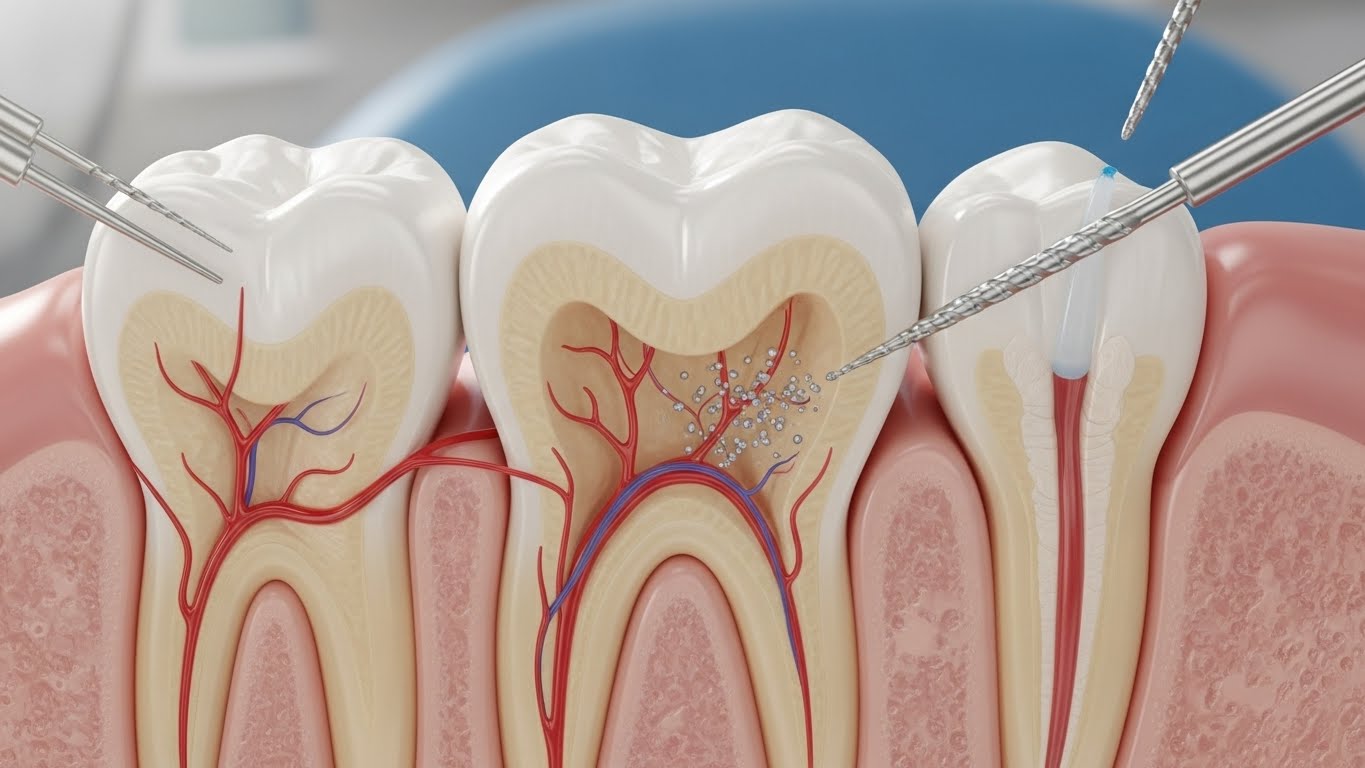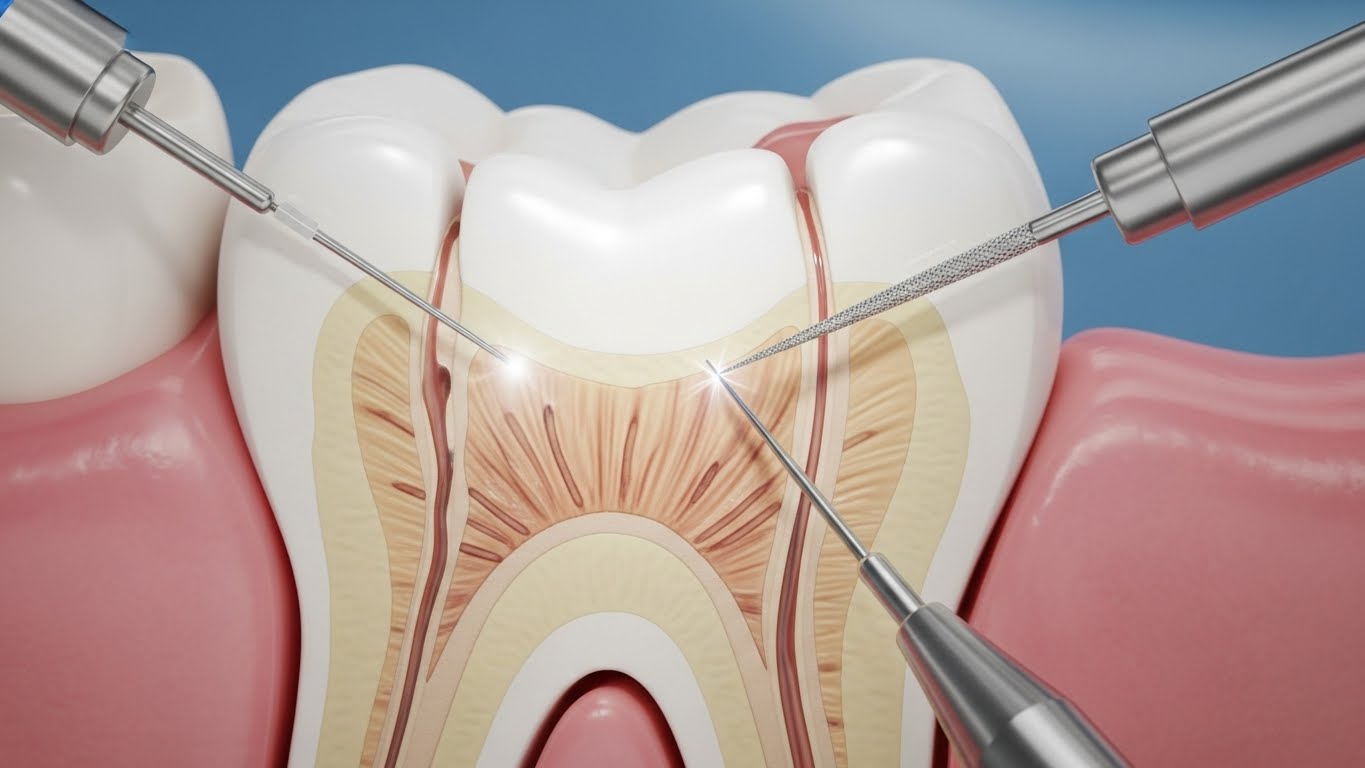
When a young permanent tooth is affected by deep decay or dental trauma, preserving the living tissue inside the tooth can be especially important. Immature permanent teeth may still be developing their roots, which means maintaining healthy pulp tissue can allow that development to continue naturally. Vital pulp therapy for immature teeth is designed to protect or preserve viable pulp tissue whenever the condition of the tooth makes that possible.
Delta Root Canal describes vital pulp therapy as a treatment intended to maintain pulp vitality in immature teeth and support normal root development. Depending on the condition of the tooth, treatment may involve partial pulpotomy, full pulpotomy, direct pulp capping, or indirect pulp capping. The practice notes that these procedures are commonly considered when teeth are affected by deep decay or trauma.
Why Pulp Vitality Matters in Developing Teeth
The dental pulp is the soft tissue inside a tooth that contains blood vessels, nerves, and connective tissue. In a mature tooth, the root has already completed most of its development. In an immature permanent tooth, however, the root may still be growing and strengthening.
Keeping the pulp alive can help support continued formation of the root structure. As root development progresses, the walls of the root can become thicker and the tooth can develop a stronger foundation.
This makes treatment planning especially important when a younger patient experiences deep decay or trauma. Removing all of the pulp immediately may interrupt this natural development, while preserving healthy tissue may allow the tooth to continue maturing.
Vital pulp therapy is therefore focused on determining how much pulp tissue remains healthy and whether that tissue can reasonably be preserved.
A partial pulpotomy removes only a small portion of inflamed pulp tissue near the area of exposure while maintaining healthy tissue deeper within the tooth. This can be appropriate when inflammation is limited and the remaining pulp still has the ability to heal.
A full pulpotomy removes a larger portion of the pulp from the crown of the tooth while preserving healthy tissue within the roots. The goal is still to maintain vitality in the remaining pulp and allow continued development.
Direct pulp capping may be considered when the pulp has been exposed but remains capable of healing. A protective material is placed directly over the exposed tissue to help create an environment that supports healing and continued vitality.
Indirect pulp capping is used when decay approaches the pulp but complete removal of the deepest affected dentin could risk exposing the pulp unnecessarily. A protective layer is left in place and sealed to help reduce bacterial irritation while preserving the tissue beneath it.
Each procedure has a different purpose, but the overall objective remains similar: preserve as much healthy pulp tissue as possible while protecting the tooth from additional damage.
When Vital Pulp Therapy May Be Considered
Deep tooth decay is one of the most common situations in which pulp-preserving treatment may be discussed. As decay moves through enamel and dentin, bacteria can approach the pulp and cause inflammation.
If the pulp remains healthy enough to recover, a conservative treatment may allow the tooth to retain vitality rather than moving immediately to complete root canal therapy.
Dental trauma can create a similar situation. Delta Root Canal notes that trauma is a common cause of endodontic concerns, particularly in younger patients, and different treatments may be used depending on the severity of the injury.
A chipped or fractured young permanent tooth can expose the pulp even when the rest of the tooth remains healthy. When treatment is provided promptly and the pulp condition is favorable, vital pulp therapy may help protect the living tissue and support continued development.
Diagnosis is critical before deciding which procedure is appropriate. The endodontist evaluates the patient’s symptoms, the condition of the tooth, the amount of remaining tooth structure, the extent of decay or trauma, and the apparent health of the pulp.
Dental imaging may also help evaluate the stage of root development and the condition of the surrounding tissues. Delta Root Canal uses modern technologies including microscopes and CBCT imaging as part of its endodontic care.
The distinction between reversible and irreversible pulp damage is important. If the tissue is mildly inflamed but capable of healing, preserving vitality may be appropriate. If the pulp is severely infected or necrotic, another endodontic treatment may be necessary.
This is why symptoms alone do not determine the treatment. Tooth sensitivity or discomfort may have several causes, and a professional examination is needed to understand what is happening inside the tooth.
Protecting the Tooth After Treatment
Successful pulp therapy does not end when the procedure is completed. The tooth must also be properly sealed and restored to prevent bacteria from entering again.
A strong final restoration helps protect the remaining tooth structure and supports normal function. The type of restoration depends on the amount of damage and the location of the tooth.
Follow-up visits are also important because the dentist or endodontist needs to monitor whether the pulp remains healthy and whether root development continues as expected.
Dental imaging may be used over time to assess changes in root length, thickness, and surrounding bone. Continued root maturation is one of the major goals when treating immature permanent teeth.
Patients and parents should also pay attention to changes after treatment. Pain, swelling, sensitivity, or changes in tooth color should be evaluated rather than ignored.
For younger patients, protecting the natural tooth can have long-term benefits. Maintaining the tooth helps preserve the bite, spacing, chewing function, and natural appearance of the smile.
Professional vital pulp therapy for immature teeth offers a conservative approach when the pulp remains capable of healing. By preserving healthy tissue, supporting normal root development, and restoring the tooth properly, treatment can help young permanent teeth continue developing rather than losing vitality prematurely.
The most appropriate procedure depends on the individual tooth and the extent of damage. Early evaluation after deep decay or trauma can improve the chances of identifying whether pulp preservation remains possible.
FAQ
1: What is vital pulp therapy?
Vital pulp therapy is a group of treatments designed to preserve living dental pulp when the tissue remains healthy enough to heal.
2: Why is pulp vitality important in immature teeth?
Living pulp supports continued root development, allowing the root to become longer, thicker, and structurally stronger.
3: What is a partial pulpotomy?
A partial pulpotomy removes only a small portion of inflamed pulp tissue while preserving healthy tissue deeper inside the tooth.
4: What is a full pulpotomy?
A full pulpotomy removes the pulp from the crown portion of the tooth while preserving healthy pulp tissue within the roots.
5: What is direct pulp capping?
Direct pulp capping involves placing a protective material over exposed pulp tissue when the tissue is considered capable of healing.
6: What is indirect pulp capping?
Indirect pulp capping protects pulp that is close to deep decay without intentionally exposing the tissue.
7: Can trauma lead to vital pulp therapy?
Yes. Dental trauma can expose or irritate pulp tissue, particularly in younger permanent teeth that are still developing.
8: Does every immature tooth with pulp damage qualify for this treatment?
No. The pulp must still have sufficient healthy tissue and healing potential. Severely infected or necrotic pulp may require a different endodontic approach.
9: How is healing monitored after vital pulp therapy?
Follow-up examinations and dental imaging can be used to evaluate pulp health, root development, and surrounding tissues.
10: What is the main goal of vital pulp therapy?
The main goal is to preserve healthy pulp tissue so the developing tooth can continue normal root formation and remain functional.